The digital pathway
Identity, approvals, documents, notifications, records, reports.
 Awqaf New Zealand Working Paper Series


Benyounis, H. (2026). From Charitable Waste to Sustainable Wellbeing: A Research Framework for Unused Qurbani Value and a Proposed “Smart Waqf Fund” Model (Version 1.0, English edition). Awqaf New Zealand. Zenodo. https://doi.org/10.5281/zenodo.23874278
This paper links Sharia grounding, operational governance, legal characterisation, economic feasibility and social development. It separates established facts, research hypotheses and institutional proposals.
Chapters 1–10

GoSmart links three levels: rediscovering the value wasted in the Qurbani system, exploring waqf as a tool for sustaining benefits, and then directing those benefits to human wellbeing in a multidimensional sense. This is a proposed line of reasoning, not automatic proof that each link has been achieved in practice.
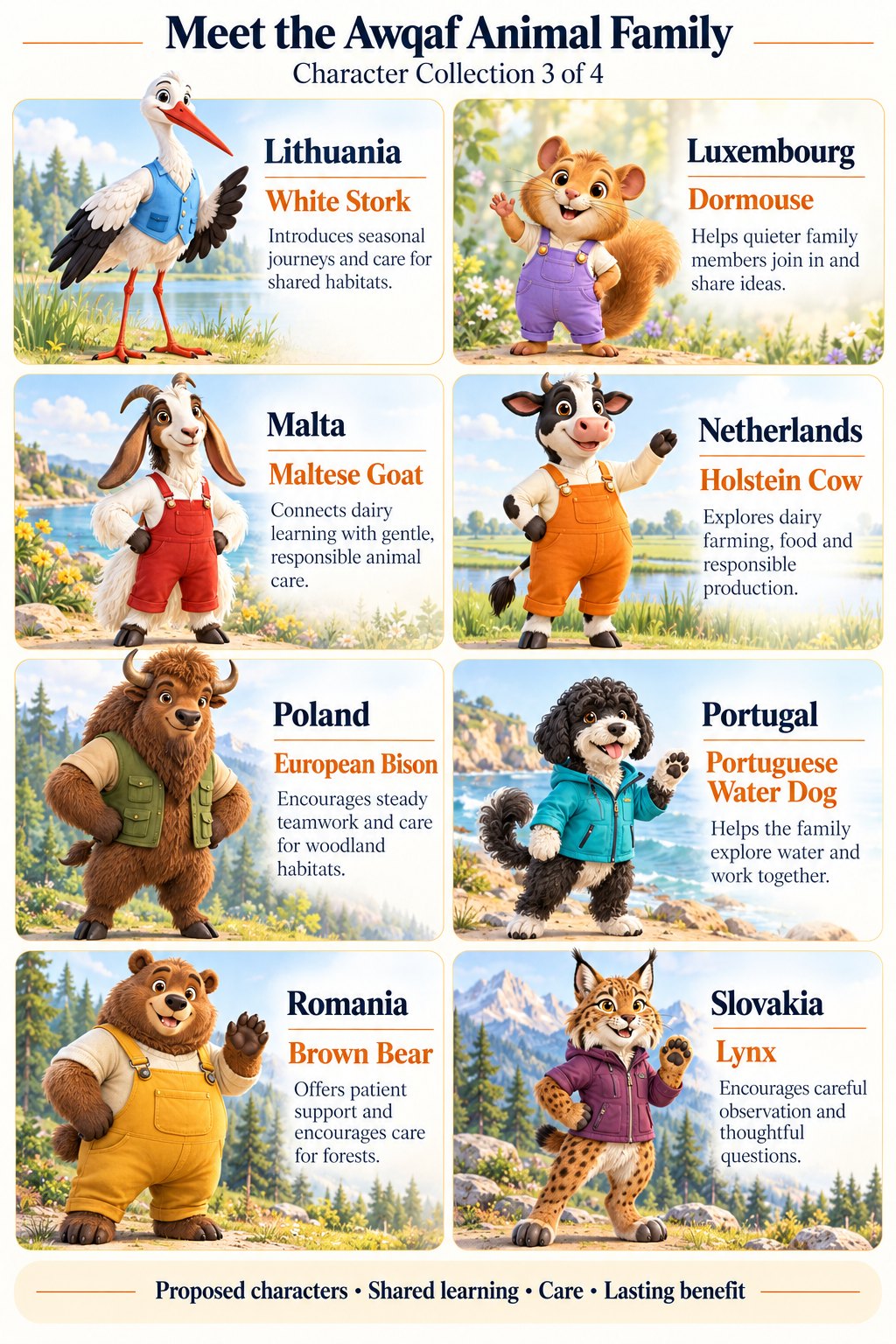
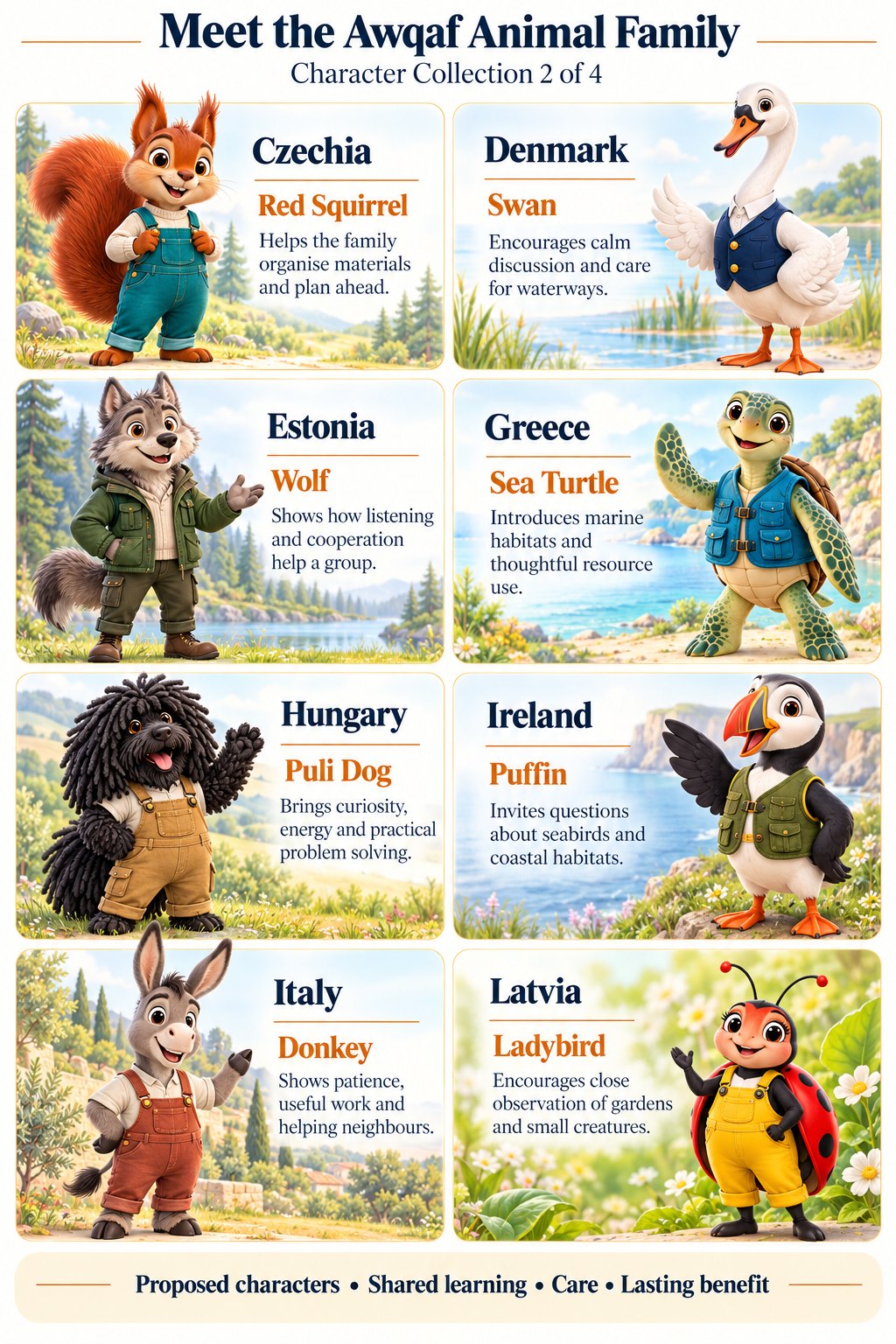
The image of roots and fruit is used to illustrate sustainability, and the educational animal illustrations are used in the awareness chapter only, while the legal and Sharia analysis pages remain calm, documented and free of marketing suggestion.
The study starts from a specific institutional hypothesis: charitable value chains may contain resources or productive opportunities that do not yield sufficient benefit, and scientific research and disciplined management can determine whether recovering that value is possible, permissible and worthwhile. It is not enough to describe a resource as “wasted” before defining the baseline, the data source and the method of measurement.
A distinction is needed here between three concepts: physical waste, which can be observed; alternative production opportunity, which requires economic comparison; and waqf return, which is only realised after deducting costs and proving the soundness of the contractual structure. These categories must not be added together into a single figure.

GoSmart v11 sets out a proposed method for measuring utilisation across six stages. It stresses that the method contains no actual measurement results, and that the productive opportunity not realised during the animal’s life is not physical loss in the same sense. Field data, not illustrations, must therefore be the basis for estimating the size of the problem.
A loss classification guide, a data collection protocol, a full cost model, alternative scenarios and sensitivity analysis. Limitations and negative results must be published as clearly as supporting results.
| Stage | Measurement question | Type of evidence required |
|---|---|---|
| Holding before Eid | What resources are used and what is lost? | Operational records |
| Slaughter | What are the inputs and outputs? | Scales and records |
| Carcass recovery | What share of the parts is utilised? | Weight data |
| The fifth quarter | How are skins, offal and other parts used? | Supply pathways |
| Distribution | What is lost in transport and storage? | Cold chain tracking |
| Forgone productive life | What alternatives exist for herd management? | Modelling of an alternative opportunity, not physical loss |
GoSmart v11 proposes dividing the Qurbani chain into six research stages: before Eid, slaughter, recovery of carcass components, use of by-products, distribution, and finally the productive life the animal may forgo. The last stage represents an alternative opportunity cost, not physical loss, and must be kept separate from indicators borrowed from food loss methodologies.
Each stage needs an operational definition, a unit of measurement and an independent party to collect data. Any inference about the scale of global waste from a single local project would be insufficient without a representative sample design.
The programme proposes testing the integration of dairy production, herd management, Qurbani timing and the use of wool, skins and by-products, while assessing animal health and welfare, the efficiency of land and water use, and commercial feasibility. The Qurbani and dairy farm is at the concept and feasibility stage and is not an operating project.
A distinction should be made between aligning management with the Hijri calendar as an operational choice, and any hypothesis about the effect of lunar phases on reproduction, which is a biological question requiring independent testing.
The concept rests on the possibility of aligning breeding, lambing and milking with the movement of Eid al-Adha through the solar year. This is a proposed calendar and management alignment; it does not establish any physiological effect of lunar phases. Experimental questions include breed variation, nutrition, animal welfare, fertility rates, production timing and scalability.
| Testable hypothesis | Test indicator | Methodological constraint |
|---|---|---|
| Feasibility of scheduling the flock by the Hijri calendar | Lambings, gestation periods, regularity of supply | Alternatives compared across different seasons |
| Feasibility of combining dairy and Qurbani production | Production, health, welfare, cost | Feasibility is not assumed before an independent trial |
| Improving resource utilisation | Main products, by-products and costs | Net, not gross, benefit |

Waqf units are a concept for making participation and digital administration easier, but they do not acquire legal or Sharia status merely by being called units. The fiqh distinction between temporary cash waqf and qard hasan remains under consideration by the relevant fiqh forum, and the outcome must not be presented as settled.
The proposed governance draws on AAOIFI GS 14 on Islamic crowdfunding where relevant, while GS 15 is considered if co-financing between institutions emerges later. Neither replaces the laws of New Zealand or the local laws of other countries.
| Issue | What must be settled before any issuance |
|---|---|
| Sharia characterisation | The nature of temporary waqf, the donor’s rights and the return of the principal |
| Legal characterisation | Does a contractual right to recover the money arise? Is it a financial product? |
| Custody and segregation | Trusteeship, separate accounts and beneficiaries’ interests |
| Disclosure | Risks, term, uses, and no unfounded guarantee of return or principal |
| Technology | Documentation, privacy, security, oversight and transaction records |
What a “unit” is must be defined in every document: is it evidence of a waqf contribution, a share in a pool, a contractual right to recover an amount, or something else? This definition determines the rights and obligations and how a shortfall is handled at the end of the term. It is proposed that the wording be tested through four separate documents: the donor’s deed, the funds management policy, the project agreement and the maturity and redemption document.
Speaking of “best endeavours” to recover the principal does not on its own determine the legal classification; the substance of the binding right is examined in each country, bearing in mind that, according to Awqaf New Zealand, the fiqh question is still before the 12th Forum.

Google for Nonprofits tools can help with online forms, documentation, correspondence, monitoring dashboards and task allocation. But using these tools does not mean they automatically provide regulated custody of funds, licensed payment processing or compliance with securities laws.
Minimum design: clear permissions, an audit log, dual approval for sensitive actions, separation of data from financial accounts, and procedures for incidents, correction and recovery.
Google for Nonprofits tools can help with forms, correspondence, databases, documentation, monitoring and reporting, but they are not in themselves a licence to issue financial instruments, hold others’ money or provide regulated payment services. The information management layer must therefore be separated from the money, custody and settlement layer, and the latter linked to qualified service providers where the law requires it.
Identity, approvals, documents, notifications, records, reports.
Permissions, backups, information security, incident response.
Accepting, holding and settling funds is not assumed to be permitted merely because an administrative platform exists.

The eleventh version describes GoSmart as an open knowledge alliance at the consultation and design stage. The appearance of a university or institution’s name in the document does not mean its final endorsement or agreement to take part. Nor does the document create a financial offer or funding for the farm.
Important elements include allowing independent research that can reject the project’s hypotheses; crediting scientific concepts to their originators; and documenting the stages of institutional approval before using partners’ names or launching joint initiatives.
The initiative proposes a chain of collaboration that begins by putting falsifiable questions to universities, then developing an independent measurement method, then limited testing, then published scientific evaluation. Vocational training providers are asked to turn the required skills into recognised learning units where possible, giving priority to groups with the fewest training and employment opportunities.
In documenting contact with Charles Sturt University, the University of Waikato and other bodies, the status and date of the relationship are stated precisely: contact, discussion, invitation, proposed project, signed agreement or actual implementation. The appearance of a university’s name in GoSmart v11 does not mean it has agreed to fund or carry out any work.

Proving agricultural productivity is not enough to prove human wellbeing. An independent measurement framework should be developed that links, where possible, waqf resources to indicators such as learning, vocational skills, economic capacity, social connection and health. Direct outputs should be kept separate from long-term outcomes.
| Level | Example indicator | Methodological caution |
|---|---|---|
| Output | Number of trainees or learning materials | Does not equal a change in wellbeing |
| Intermediate outcome | Skill gained or income improved | Needs a baseline and comparison |
| Long-term impact | Sustained improvement in one dimension of wellbeing | Needs long-term independent evaluation |
Counting units, views or trainees is not enough. The logic chain should be tracked: resources → activities → outputs → outcomes → impact, identifying what can be attributed to Awqaf New Zealand’s intervention and what is influenced by external factors.
| Level | Example indicator | Means of verification |
|---|---|---|
| Outputs | Number of courses or studies completed | Records and published outputs |
| Outcomes | Improved skills or transition to work | Before/after assessment and follow-up |
| Impact | Sustained improvement in income, food or resources | Longitudinal measurement and suitable comparison |
Candidate indicators relate to Sustainable Development Goals 2, 4, 8, 9, 12 and 17. The alignment of each indicator with the appropriate sub-target is to be set before publication, without claiming impact that has not been measured.

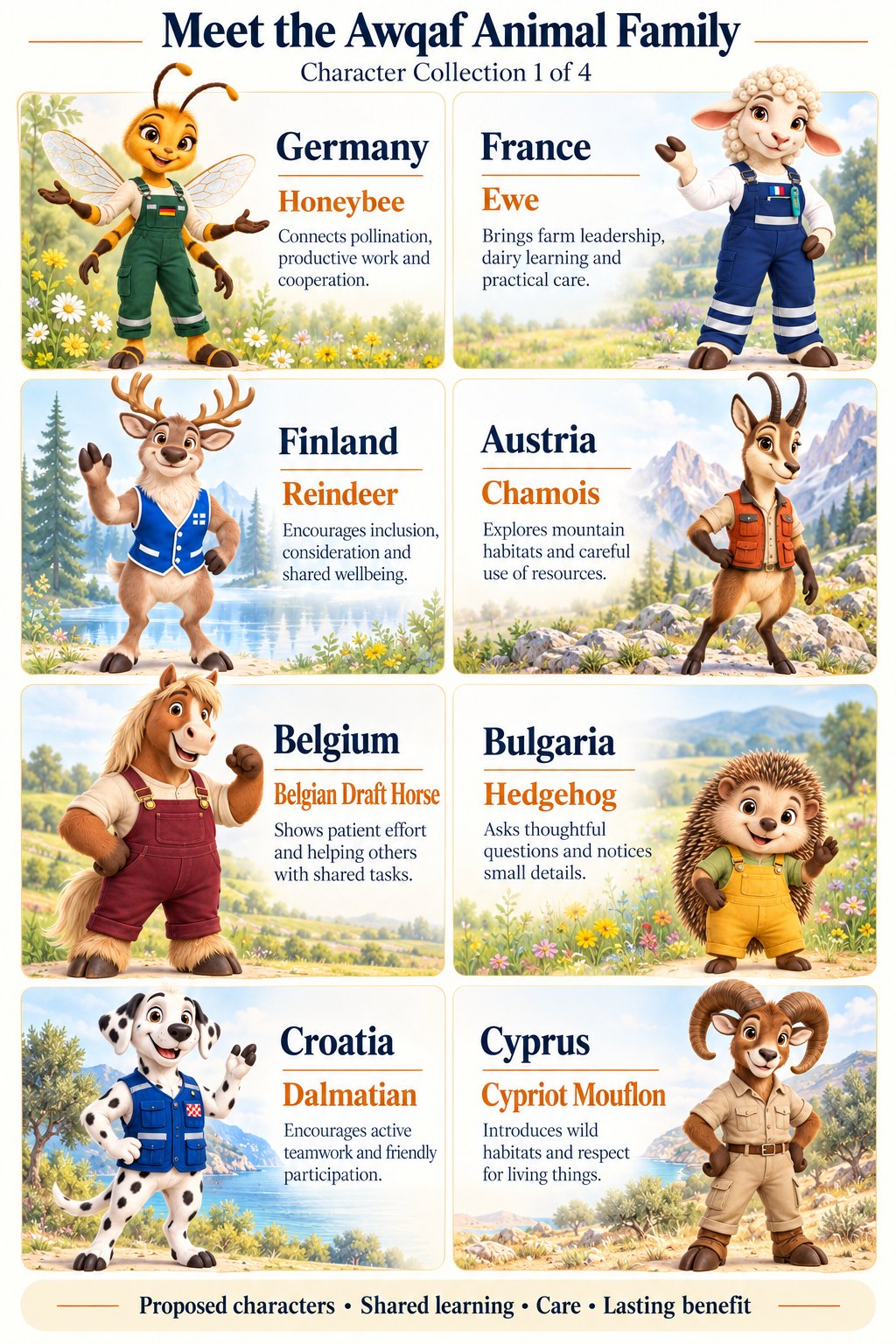
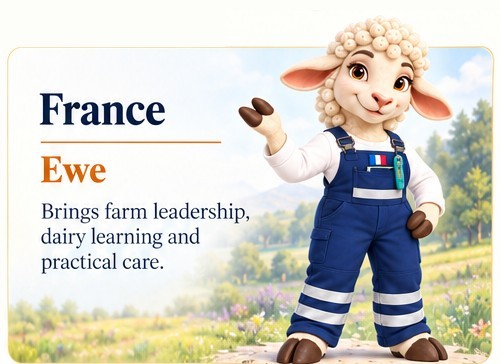
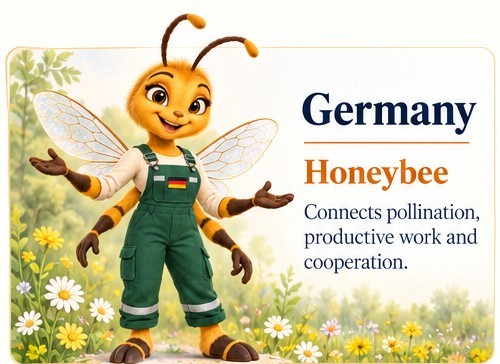
The animal and bee characters are used to introduce ideas of care, production, cooperation and not wasting resources, while introducing children to the names of animals and their habitats in different countries. The episodes should not reduce the Qurbani to a commodity or suggest that financial return is its devotional purpose.
The episode opens with a ewe on an imaginary farm who notices that some of her wool is being lost. She asks the bees and the farmer for help to learn how it can be used. It ends with an open question for children about the value of resources and kindness to animals. This is a proposed educational story, not a description of an existing project.
The animal family is built on characters, each linked to a country, a natural environment and a skill or value. This structure allows short episodes that explain cooperation, kindness to animals and wise use of resources, and introduce viewers to countries and animals. Education for children is kept completely separate from any financial promotion of waqf units; financial invitations should be directed to adults within the limits of the law and approvals.
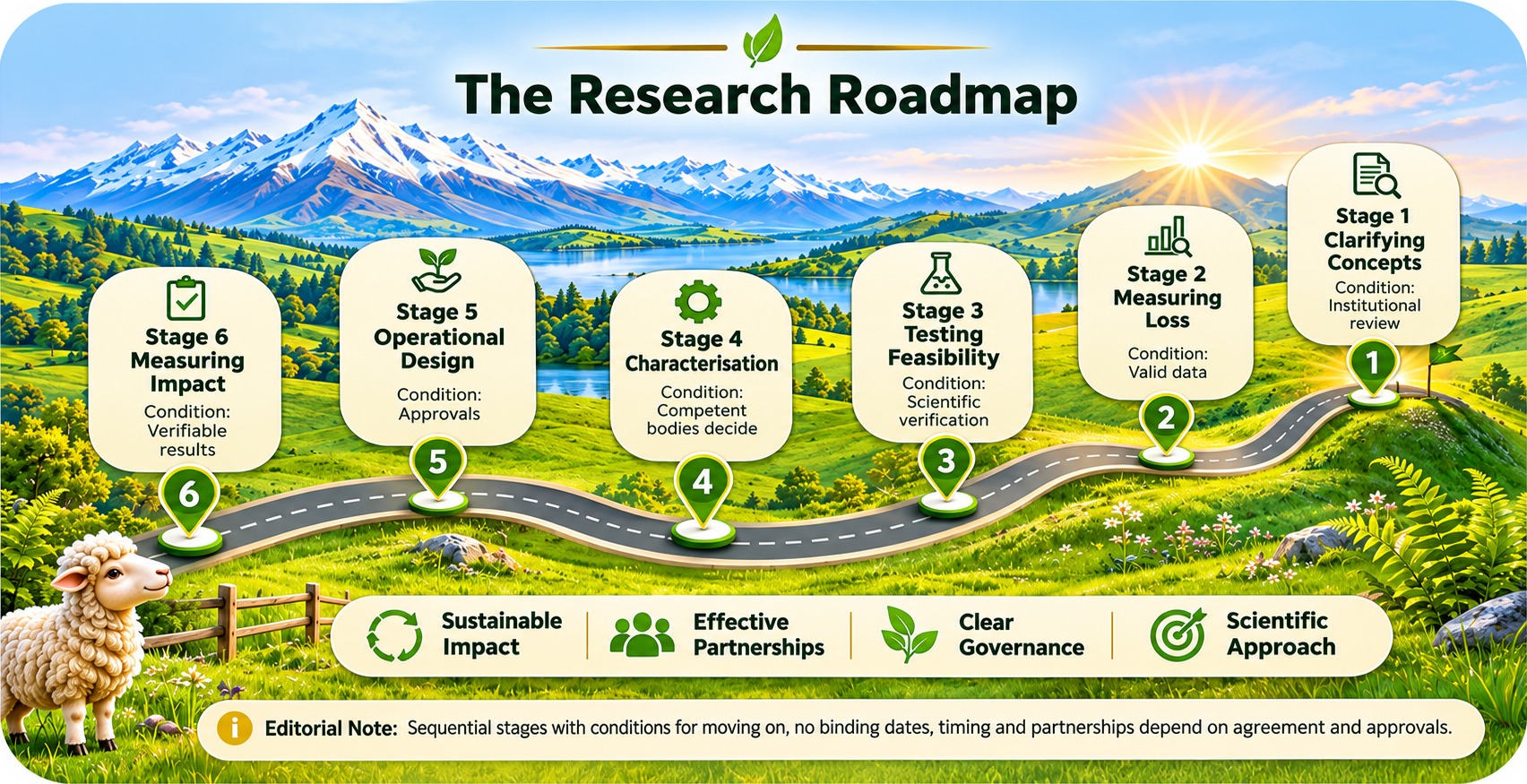
| Stage | Output | Condition for moving on |
|---|---|---|
| 1. Clarifying concepts | A glossary of terms and a source file | Institutional review |
| 2. Measuring loss | An independent method and field data | Validity of the data |
| 3. Testing feasibility | Technical, financial and environmental scenarios | Scientific verification |
| 4. Characterisation | Sharia and legal review | Decisions of the competent bodies |
| 5. Operational design | Governance, technology and agreements | Approvals and accreditations |
| 6. Measuring impact | Wellbeing indicators and an independent report | Verifiable results |

1. GoSmart v11, “Global Open Smart Waqf”, version of 30 September 2026, an unpublished consultation document; used here to define the conceptual framework and verification cases, not as final approval by the bodies named.
2. Awqaf New Zealand, “Engineering the Awqaf Industry”, https://awqafnz.org/engineering/en.html, an institutional reference defining the project and its development; the latest update must be checked before publication.
3. AAOIFI, Governance Standard GS 14: Islamic Crowdfunding Governance, and GS 15: Syndicated Financing, supporting governance references that do not replace a qualified legal or Sharia opinion.
4. The proposed method for measuring utilisation in the Qurbani chain referred to in GoSmart v11; not a set of published results or evidence of the scale of global waste.
5. All economic, farming and future partnership scenarios in this paper remain research proposals unless accompanied by approval documents and independent verification results.
Next editorial step: complete the reference appendices, verify the legislative texts in each jurisdiction, and include purpose-drawn infographics for each chapter with a list of figures and data sources.
Risk · Regulatory comparison · Awareness · Standards · Fiqh · Feasibility · Research · Rights · Sources

Awqaf New Zealand proposes studying several layers of risk management, including takaful insurance where available and permissible, an independent third-party guarantee where its Sharia and legal conditions are met, consideration of eligibility for zakat for debtors (al-gharimin) under its rules, and the donor’s acknowledgement of risk at the time of contracting. These mechanisms are not automatic substitutes for capital and do not mean its recovery is guaranteed.
A distinction is needed between an enforceable contractual obligation, an undertaking to use reasonable care, a donation and an independent guarantee. This area remains a proposal for fiqh and legal investigation.
Awqaf New Zealand’s concept relies on several possible risk mitigation mechanisms: takaful, an independent third-party guarantee, research into whether the rules of zakat for debtors apply when their conditions are met, and the donor’s acknowledgement of risk, together with oversight, diversification and reserves where permissible. These mechanisms are not interchangeable or guaranteed to be available; each has its own conditions, costs and limits of enforceability.
| Scenario | Possible response | Limit that must be disclosed |
|---|---|---|
| Animal deaths or a covered loss | Takaful claim if the conditions of cover are met | Exclusions and limits of compensation |
| Project defaults on repayment | Review of the independent guarantee and reserves | Solvency of the guarantor and enforceability of the undertaking |
| Uncovered loss | Activating remediation procedures under the contract | The donor may bear loss of the principal |
| Request for support from zakat funds | Independent assessment of the debtor’s eligibility | Not an automatic or guaranteed source of funding |
A separation is required between the donor bearing investment risk and the nazir’s (trustee’s) liability for negligence, misconduct or breach of contract; acknowledgement of risk must not be read as a blanket release from liability.
| Risk category | Event or cause of loss | Proposed treatment | Evidence required |
|---|---|---|---|
| Sharia | Differing characterisation of temporary waqf and qard hasan, or of the guarantee | Not pre-empting the Forum; reviewing contracts and Sharia decisions | A qualified fatwa and a register of decisions |
| Legal | The unit classified as a debt instrument or regulated product | A legal opinion for each market before promotion | A written characterisation memo |
| Liquidity | Unit maturities coinciding with delayed project revenue | Modelling maturity dates and a liquidity reserve where permissible | Stress test and cash flow forecast |
| Credit | Default by the project or the independent guarantor | Solvency assessment, exposure limits, a permissible independent guarantee | Third-party assessment and guarantee wording |
| Operational | Record errors or funds spent outside their purposes | Segregation of duties, review and reconciliation | Audit trail and regular reconciliations |
| Agricultural | Flock disease, volatile feed prices or production shortfall | Veterinary care, contingency plans, conditional takaful | Welfare protocol and sensitivity calculation |
| Technology | Data leak, loss of records or account compromise | Least privilege, backups, incident response | Security test and continuity plan |
| Reputation and marketing | Educational content understood as an invitation to subscribe | Separating children’s content from financial offers | Editorial policy and compliance approval |
Likelihood, impact, owner, actions and review date are assessed for each risk before operations begin. The existence of takaful or a guarantor does not automatically turn the return or the principal into a guaranteed amount, nor may zakat for debtors be treated as automatic compensation for business risk.
The following comparison is a research checklist, not a final ranking of countries, a fatwa or a legal opinion. The choice depends on the true nature of the unit’s rights, the issuer, the location of the contributor and cross-border marketing.
| Country | First area of inquiry | Body or framework requiring verification |
|---|---|---|
| New Zealand | Does a right to recover the amount arise, and how is the product classified? | Financial Markets Conduct Act / FMA |
| Australia | Offer of a financial product or credit, and the limits of exemptions | Corporations Act / ASIC |
| Canada | Securities requirements differ by province | Provincial securities regulators |
| United Kingdom | Classification of the activity, the offer and financial promotion | FCA / Financial Services and Markets Act |
| Kuwait | Waqf, the competent authority and whether an offer is possible | The competent waqf and regulatory bodies |
| Bahrain | Crowdfunding and Islamic financial products | Central Bank of Bahrain |
| Malaysia | State jurisdiction over waqf, and regulation of fundraising | Waqf authorities and the Securities Commission where applicable |
No cell should be read as approval to issue or as the existence of an exemption. An independent legal memo is required for each jurisdiction before recommending a first country.
The seven countries are assessed on a single matrix, not on reputation or institutional proximity alone. The assessment begins with the legal characterisation of the right of recovery, then the need for a licence, then the possibility of cross-border marketing, then cost, time, governance and the waqf environment. The place where the entity is established, where the project operates and where the donor lives are treated separately.
| Decision criterion | Screening question | Type of evidence |
|---|---|---|
| Classification | Does the unit create a debt security, a financial product or a different charitable arrangement? | Statutory text and a local legal opinion |
| Issuance | Is a licence, disclosure or an independent trustee required? | The regulator and legislation |
| Marketing | Who may be approached, and in which country? | Rules on cross-border offers |
| Feasibility | What are the cost, time and institutional capacity? | Verifiable quotes and estimates |
This version contains no final ranking of New Zealand, Australia, Canada, the United Kingdom, Kuwait, Bahrain or Malaysia; that requires current formal legislative research and local review before any operational recommendation is made.
The following comparison is a map of regulatory questions, not a legal opinion or a licence to issue. It must be applied to at least two contractual versions: (a) a unit granting a binding right to the return of the principal, and (b) a unit where the return of the principal depends on the project’s result and best endeavours. A difference in wording alone does not guarantee a different legal outcome.
| Country | Regulatory entry point | Decisive issue | Primary body or reference |
|---|---|---|---|
| New Zealand | Financial Markets Conduct Act 2013, together with rules on charities and trusts | A right to repayment may fall within the definition of a debt security even without interest; the enforceable right, the nature of the pool and any applicable exemptions must be examined | Official legislation; Financial Markets Authority (FMA) |
| Australia | Corporations Act 2001, disclosure and financial services rules, and state fundraising legislation | Is the unit a security, a managed investment scheme or a donation? What is the effect of advertising to the public in each state? | ASIC; ACNC; state fundraising regulators |
| Canada | Provincial securities laws, and federal and provincial charity and tax regulation | Rules differ between provinces; does the unit represent a debt obligation or an investment contract? | Canadian Securities Administrators; provincial regulators; CRA |
| United Kingdom | FCA rules and the Financial Services and Markets Act, and charity law by nation | Distinguishing charitable activity from regulated financial activity, the substance of the right of recovery, and promotional communications | FCA; Charity Commission for England and Wales |
| Kuwait | Regulation of waqf, charities and financial markets, together with the relevant government mandates | The body authorised to establish the pool and issue its units, the scope of the awaited fiqh decision, and the nature of marketing to individuals | Kuwait Awqaf Public Foundation; Capital Markets Authority; competent bodies |
| Bahrain | Central Bank of Bahrain rules and the regulation of financial institutions and waqf | Does the structure require a licensed institution or an approved arrangement for custody and distribution, and how is Sharia governance applied? | Central Bank of Bahrain (CBB); waqf bodies |
| Malaysia | Securities Commission rules, regulation of digital markets, and state-level waqf mandates | Determining jurisdiction between the state waqf body and the federal financial regulator, and characterisation before choosing a funding platform | Securities Commission Malaysia; State Islamic Religious Councils |
At this stage there is not enough evidence to give the seven countries an objective numerical ranking. The final comparison is only fit for a decision once local consultations, cost, time and cross-border marketability are complete. A distinction is always kept between the country where the pool is established, the country of the project and the country where the participant lives.

Awqaf New Zealand is exploring animation and animal characters as a way to teach the values of cooperation, care and responsible use of resources. Artificial intelligence helps with drafting, translation and design, while verification, editing and intellectual property remain human responsibilities.
General awareness aimed at families must be clearly separated from financial promotion aimed at adults; no offer of units begins before the relevant requirements are met.
Awareness channel: youtube.com/@AwqafNewZealand
The full Awqaf animal family character collections are in the image appendix at the end of the paper.
Responsible marketing begins with education about waqf, then publishing working papers and areas of uncertainty, then listening to scholarly critique, and only moves to offering units for participation after the structure’s Sharia validity and legal status in the target markets have been verified. The YouTube channel and animated content can serve the first, educational stage without invitations to subscribe or promises of repayment.
The role of artificial intelligence in initial research, editing, translation, design and production is documented, with human review of facts, references and rights, and the output is not described as “approved” or “peer reviewed” merely because the technology was used.
Governance Standard No. 14 is examined as the main reference for the governance of Islamic crowdfunding, including disclosure, contributor protection, separation of responsibilities, Sharia oversight and management of digital operations. Governance Standard No. 15 deals with syndicated financing, and becomes relevant if the model moves to financing in which several institutions take part; it is not assumed to apply automatically to every individual unit.
Operator identity, independent custody, disclosure, Sharia review, complaints, technical risk.
Arrangements between institutions, coordinator powers, default management, conflicts of interest.
AAOIFI standards do not replace licensing or legal obligations in the country of issuance or marketing.
The final reference version needs a precise clause-by-clause matrix linking the text of each standard to the corresponding contractual and operational clause in the model, with review of the official approved edition.
| Area | What to examine under GS 14 | Relevance of GS 15 | Document required |
|---|---|---|---|
| Identity and responsibility | Role of the platform operator and the parties | Coordinator of institutional financing, where there is one | Governance structure and contracts |
| Funds | Custody, segregation and oversight | Allocation of obligations between financiers | Custody and settlement agreement |
| Disclosure | Risks, terms and information | Disclosure between parties to syndicated financing | Key information document |
| Sharia oversight | Review, decisions and correction | Handling differences in institutional arrangements | Register of decisions and independent review |
| Digitisation | System security and information protection | Coordinating records where there are several parties | Security and privacy policy |
This is a preliminary thematic matrix, not a certificate of conformity. Before final publication, the paragraph numbers of both standards and their approved texts must be included, and each obligation linked to an operational clause and evidence of verification.
Governance Standard 14 addresses governance in Islamic crowdfunding and is a suitable starting point for designing the operator’s role, separating participants’ funds, disclosure, Sharia oversight, reporting and digital security. That some of its principles apply does not mean the waqf structure conforms to the standard in full. Standard 15 covers syndicated financing between institutions and becomes relevant when there are several institutional financiers or the transaction requires a coordinator and an agreement between financiers.
Alongside these two standards, the Waqf Governance Standard GS 13 is included in the review of references, with the scope of each standard distinguished. The final conformity matrix requires going back to the approved texts of the standards clause by clause, not relying on titles or general commentary.
This section presents the history of the study of temporary cash waqf and the fiqh views on time limits, recovery and guarantees, drawing on Resolution No. 140 (15/6) of the International Islamic Fiqh Academy, AAOIFI Sharia Standard No. 60, Awqaf New Zealand’s paper to the Maliki forum, and the historical study published by ISRA in 2016.
The purpose of this section is to document where the difficulty lies and the scope for ijtihad, not to issue a fiqh ruling parallel to the Forum’s process or to pre-empt its decision.
The research should distinguish between whether endowing cash is permissible in principle, whether a time limit is permissible, the ruling on returning the principal to the donor, the effect of using the money for investment or lending, and the limits of guarantee. These are neighbouring questions, not one question. Resolution No. 140, Sharia Standard 60 and the 2016 ISRA study are presented within their context and time frame, without attributing approval of the current structure to them.
The study is built on a general model that can be applied in more than one sector, and its hypotheses are then tested in the proposed Qurbani sheep and dairy project. It separates potential revenue from the costs of operation, governance, takaful, guarantees, training and research, and tests sensitivity to volatility, default and demand.
| Assessment question | Indicator or document required | State of knowledge |
|---|---|---|
| How much of the resource is unused? | Independent measurement using the Qurbani chain and the QUI index | Proposed method; data not yet established |
| Is the activity sustainable? | Costs, revenue, working capital, stress tests | Needs a trial and data |
| Is social benefit generated? | Training, employment, food and waste reduction | Target indicators, not achieved results |
Hypothetical figures are not used as confirmed global statistics, and the animal’s forgone productive life is not confused with actual physical loss.
It is proposed that the feasibility criterion be sustainable net benefit after deducting full costs, not gross revenue. The calculation includes the costs of data collection, trials, animal welfare, operations, insurance, governance, audit, marketing, compliance and training.
At least three scenarios must be tested: base, stress and optimistic, stating the assumptions and their sources. The tables are not filled with undocumented figures; they are prepared as templates ready to receive the results of the independent field study.
| Measurement item | Data required | Verification method |
|---|---|---|
| Comparative baseline | Costs and returns in the existing Qurbani system | An independent field study and documented comparison |
| Alternative scenario | Dairy, breeding, welfare, slaughter, by-products | A limited trial under veterinary controls |
| Full costs | Feed, labour, training, insurance, compliance, transport, marketing | Invoices and estimates with stated assumptions |
| Risks | Deaths, disease, price volatility, delayed maturity | Sensitivity analysis and stress scenarios |
| Social impact | Skills, employment, food, waste reduction | Baseline and follow-up over time |
The theoretical value of by-products must not be added to realised revenue; there may be processing costs, marketing barriers or health requirements that make the net value far lower than the gross value. Likewise, extending an animal’s productive life is not “food loss”; it is a separate economic question about the alternative opportunity.
Awqaf New Zealand seeks to engage with universities to test the hypotheses independently, and in parallel with vocational training providers to prepare people from groups with the least academic and vocational opportunity. The Hijri-calendar-aligned breeding and dairy project is presented as an experimental research framework, not a proven production protocol.
The research should state precisely the status of each institutional relationship: contact, discussion, research invitation, memorandum of understanding or approved project. University names are not presented as implementing partners unless there is evidence of this.
Training outputs and verifiable skills.
Moving from training into work and income opportunities.
Resource efficiency and loss reduction based on independent measurement.
Real participation by groups with the least academic and vocational opportunity requires setting entry conditions, training costs, options for recognising qualifications, access support and pathways into work. Training units are best designed with qualified vocational institutions rather than assuming the production project itself is an accredited training provider.
It is proposed that research protocols and both negative and positive results be published, and that researchers have the right to reach independent conclusions even if the results do not support Awqaf New Zealand’s hypotheses. This condition is part of the model’s credibility.
The details of the model and its areas of uncertainty are open to scholarly critique, and researchers are encouraged to propose changes and test the hypotheses. Awqaf New Zealand asks for prior written permission before other waqf institutions adopt the Smart Waqf Fund model or use its operational and contractual documents, while the legal rights of research and quotation remain in place.
Before publication, this request must be reconciled with the licence of the paper’s own files; an open licence that allows reuse may conflict with requiring prior permission for some uses. The wording is to be reviewed legally before the DOI deposit.
A distinction should be made between copyright in the paper’s text and illustrations, the name or distinctive mark of the model, any trade secrets, and contractual rights to use the contract templates. The request for institutional permission is presented as a proposed usage policy that needs legal review, not as absolute protection preventing all reuse or quotation.
Before depositing the paper with Zenodo, a licence consistent with this policy must be chosen; an open licence such as CC BY may grant wider reuse rights than intended, and conflicting conditions must not appear in the research file and on the deposit page.
| Source | Role in the research | Review required before release |
|---|---|---|
| AAOIFI Governance Standard 14 | Governance of Islamic crowdfunding | Paragraph references and check against the official version |
| AAOIFI Governance Standard 15 | Institutional syndicated financing, where it applies | Limits of applicability and clause-by-clause comparison |
| Sharia Standard 60 and Academy Resolution 140 | Grounding for cash waqf and time-limited waqf | Quoting the approved texts and analysis without overreach |
| ISRA study, 2016 | History of the earlier model and historical endorsement | Identifying names and the scope of signature precisely |
| Maliki forum paper and the book on the differences | Fiqh development and contractual research | Documenting pages, ideas and points of disagreement |
| GoSmart v11, the QUI index and published studies | Applied research and the resource measurement method | Separating method, results and agreements |
| Legislation of the seven countries | Choosing the jurisdiction of first issuance | Current official sources and local legal review |
This release is a development version of the design and content, not a peer-reviewed version, a Sharia or legal opinion, or a financial offer document. No DOI is assigned before review is complete and the version is fixed.
This study relies on primary institutional sources and attached documents, with links to official bodies. The links below were used to identify points for verification; listing a reference must not be read as endorsement of Awqaf New Zealand’s model by the body named.
Proposed awareness characters; a fictional story, not research findings. Rights for institutional and commercial publication of the images must be confirmed before public use.