Executive summary
Awqaf New Zealand has decided to develop animation as a long-term education and communication tool. The proposed Awqaf Animal Family, a cast of animal characters each linked to a country, its environment and a value, is intended to give the organisation and its partner Awqaf bodies one recognisable identity across languages, generations and countries. Thirty-six country representatives have now been designed. Qurbani and awqaf are long-established faith-based practices with their own institutions; Awqaf New Zealand does not seek to compete with them, but to help both be used more efficiently.
The first use, from 2027, is Qurbani education and awareness with Awqaf Canada, and with Awqaf Finland and Awqaf France once they are established. Content about the proposed Smart Waqf model will follow only after the Twelfth Forum for Waqf Jurisprudence Issues has given its decisions and after legal review in each country.
The strongest rationale is cultural portability. Human presenters are easily read as representing one ethnic or national group; Western Muslim communities are highly diverse. Animal characters can carry the same visual identity in English, Arabic, French and Finnish. This does not make them culturally neutral: animals, music and images carry religious and cultural meanings of their own, and these are addressed directly in this paper.
The research evidence supports careful testing rather than confident claims. Animation gives a small average learning advantage over static pictures, and well-designed educational programmes with recurring characters have measurable benefits. However, one study found that a sharing story told with animal characters did not increase young children's real-world sharing, while the same story told with human characters did. The paper therefore builds a bridge from story to real life into every episode, and treats behaviour change as a hypothesis to be tested.
The paper proposes a phased plan for 2027: approve the characters and editorial rules, register trade marks, produce a short pilot, test it in English and Arabic, run a Qurbani campaign with partner Awqaf bodies, and continue, revise or stop on the evidence.
1 Purpose, scope and relationship to published work
This paper accompanies Awqaf New Zealand's working paper From Charitable Waste to Sustainable Wellbeing (Benyounis, 2026a), which sets out a research framework for unused Qurbani value and a proposed Smart Waqf Fund model, and its earlier paper From Awqaf Sukuk to Awqaf Units (Benyounis, 2026b). Those papers describe what Awqaf New Zealand proposes. This paper concerns how those ideas are explained to the public, especially to Muslim families in Western countries who may never read a feasibility study or a jurisprudential paper.
Qurbani and awqaf are long-established faith-based industries, served by many organisations around the world. Awqaf New Zealand does not aim to compete with them. Its aim is to help both be used more efficiently: less of each Qurbani animal wasted, and more of the value of waqf put to lasting use. The animation serves that aim.
Its scope is awareness, public education and the institutional identity of the Awqaf Animal Family. It does not describe any waqf unit as available, guaranteed, Sharia-approved in its current form or legally cleared in any jurisdiction.
2 What the evidence says, and what it does not
2.1 Learning from animation
Mayer's synthesis of more than 200 experiments sets out design principles for learning from words and pictures, and shows that multimedia helps when it is designed around how people process information, not when decoration is simply added (Mayer, 2021). A meta-analysis found a small average learning advantage for animation over static graphics (Hedges' g = 0.226), with wide variation by subject and design (Berney & Bétrancourt, 2016), consistent with an earlier review (Höffler & Leutner, 2007). Animation is therefore a reasonable choice, but its benefit depends on good design and must be tested.
2.2 Recurring characters and children's learning
A meta-analysis of 24 studies across 15 countries found positive learning effects from international Sesame Street productions (Mares & Pan, 2013). Toddlers learned more from a video when it was presented by a character they had come to know personally (Calvert et al., 2014). Both findings support a stable cast that children meet repeatedly.
One finding is a direct caution. Preschoolers who heard a sharing story with human characters shared more afterwards, while those who heard the same story with animal characters did not (Larsen et al., 2018). Values taught through animal characters should therefore not be assumed to carry over into children's behaviour. Each Awqaf Animal Family episode will end with a short real-life bridge, showing real families or children acting out the value, and the effect will be measured (section 10).
2.3 Characters, recognition and trust
Marketing research shows that trust in a spokes-character shapes attitudes towards the brand it represents (Garretson & Niedrich, 2004), and that characters designed to convey sincerity build trust more strongly than those designed to convey competence (Folse et al., 2012). These are commercial findings, not studies of charities or Muslim audiences, but they suggest a useful design rule: the characters should feel sincere and caring rather than clever or salesman-like.
2.4 Islamic children's media
Studies of Islamic children's media show how animation can carry charitable and moral messages: philanthropic values in the Malaysian series Upin & Ipin (Mohd Aris et al., 2023) and sharing in Omar & Hana (Utami & Harianto, 2021). Both analyse what episodes communicate; neither measures lasting changes in children's behaviour. A study of Islamic picture books in Britain documents how publishers moved from avoiding animate figures to negotiated forms of representation (Janson, 2012), which is directly relevant to section 5.
2.5 Western Muslim communities are not one audience
Research on young British Muslims (Kabir, 2010), Finnish Muslim students (Rissanen, 2012), Arab families in New Zealand (Al-Sahafi, 2015) and Bangladeshi children in the United Kingdom (Iqbal & Liddicoat, 2026) shows identities and language choices that vary by family, generation and country. Children actively value Arabic, English and their heritage language for different reasons. Research on UK Muslim donors identifies religious motivations for giving, including reward in the hereafter and consistency with belief (Jamal et al., 2019). These studies support multilingual provision and local adaptation; they do not establish comparable patterns across all six countries in this paper.
2.6 Prior work on Qurbani and waqf animation
Animation for Qurbani and waqf is not new. Kuwait Awqaf Public Foundation's Qutoof Al Khair platform offers bilingual Arabic and English illustrated and animated stories on waqf and charitable values, some with animal characters (Kuwait Awqaf Public Foundation, n.d.). Diyanet TV in Türkiye broadcasts Yusuf'un Dünyası, a recurring cartoon about a Muslim family, with episodes on avoiding waste and on sharing (Diyanet TV, n.d.). Indonesia's Ministry of Religious Affairs has produced a ten-episode animated series on zakat and waqf (Jamil, 2023), and a Saudi waqf fund has been promoted through animated videos (FramedKeys, 2020).
Charities also use animal characters. Lazismu's cow and sheep mascots, Samu and Domu, promoted its annual Qurbanmu programme in Jakarta in 2024. The same programme tackles two problems raised in Benyounis (2026a): Qurbani meat concentrated in a few places, and preservation, through packaged Qurbani meat for disaster relief (Lazismu, 2024).
Our search (November 2026, in six languages) was targeted rather than systematic. We found no published example that combines five features: a family of country-linked animal characters; characters shared by awqaf bodies in several countries; localisation into many languages; one connected story covering both Qurbani and waqf; and a link between the unused value in the Qurbani chain and temporary cash waqf (Benyounis, 2026a). That combination is what this paper proposes to test. It is not a claim to be first.
3 Why animation for Western Muslim communities
3.1 One identity across many communities and languages
In cities such as Toronto, Paris, Helsinki, Sydney and Auckland, Muslim communities include Arab, South Asian, Somali, Turkish, Bosnian, Malay and convert families. A human presenter from one background can unintentionally signal that a campaign belongs to that group. An animal cast can keep the same faces, colours and story structure while the voice changes language. This is a reasonable expectation, to be measured rather than assumed (H1, H2).
3.2 A bridge between generations
Many Western-born Muslims are more comfortable in English, French or Finnish than in the Arabic or Urdu terms used for waqf. Animation can teach the values first, such as stewardship, avoiding waste and kindness to animals, and introduce terms like waqf, nazir and qard hasan gradually, with plain-language explanations.
3.3 Recognition at first sight
Repeated character design, the Awqaf New Zealand name, its green-and-gold colours and a short sound signature (section 9.1) can help families recognise the source before reading any caption: at an exhibition, on a cup, a T-shirt or a WhatsApp sticker. Recognition is a goal to be measured, not an outcome to assume.
3.4 Lower cost per additional language
Once character models and reusable scenes exist, AI tools make additional language versions and new episodes far cheaper than filming new presenters. Translation review, voice quality, rights and accessibility still cost time and money. Any efficiency claim will be tested against real production records (H5).
4 The Awqaf Animal Family
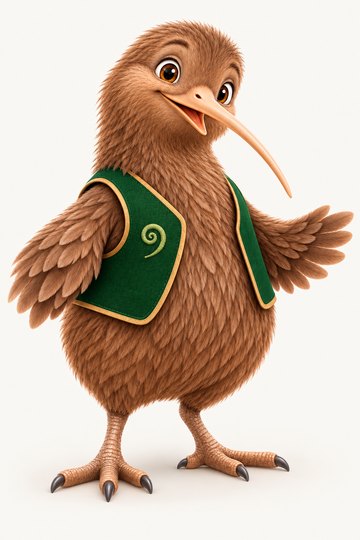
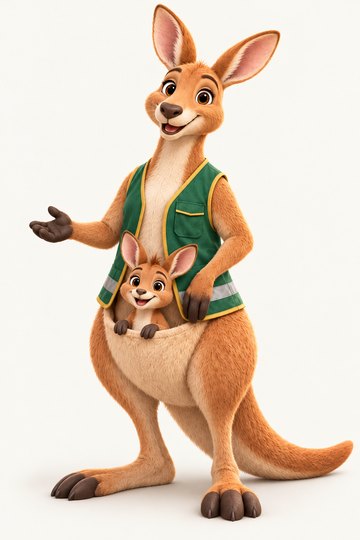
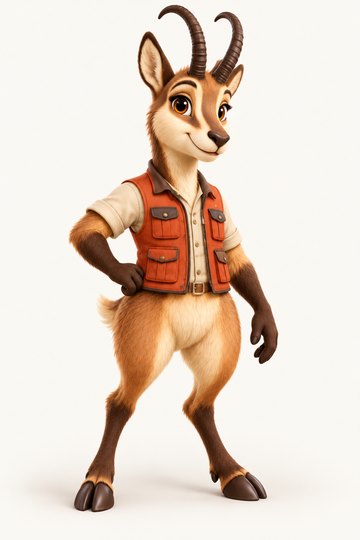
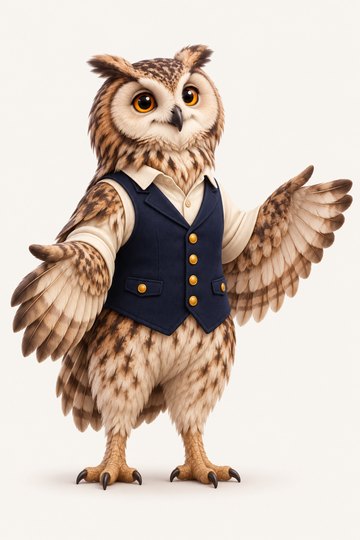
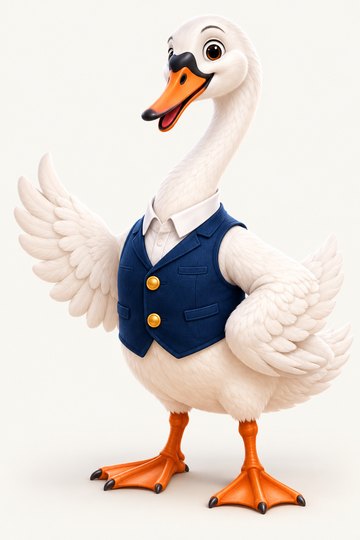
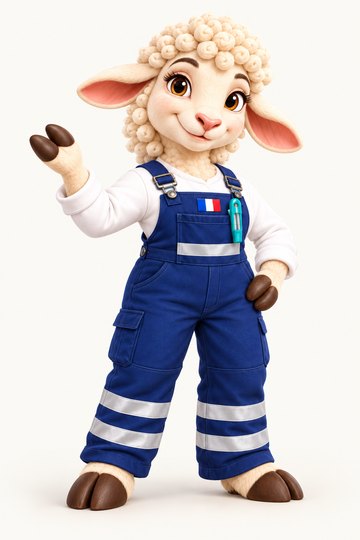
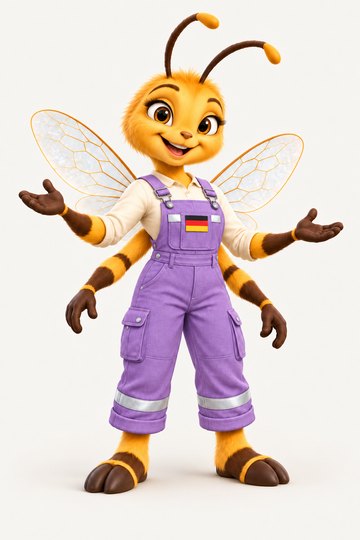
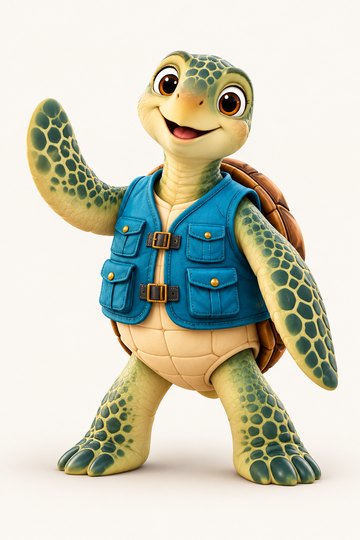
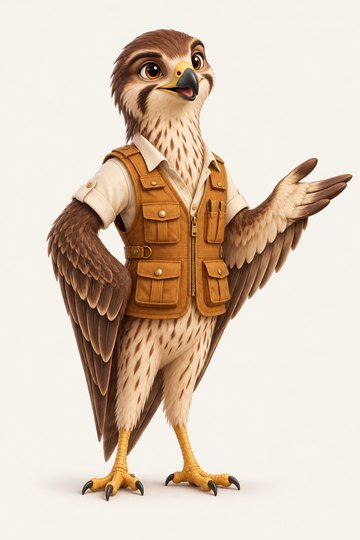
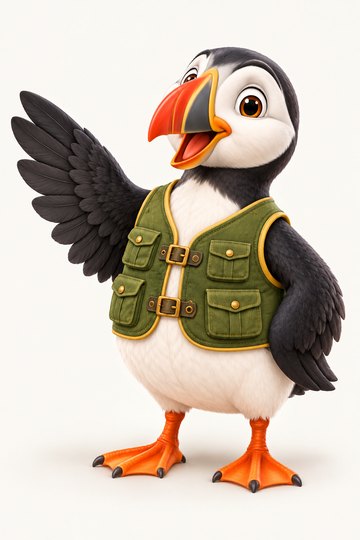
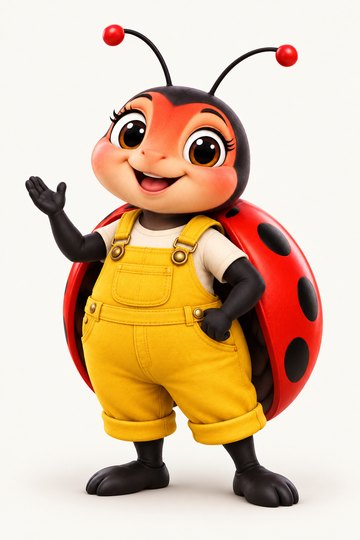
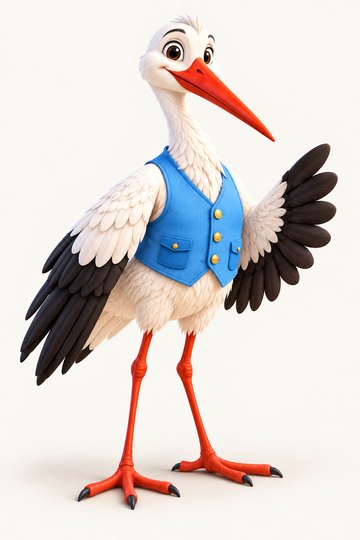
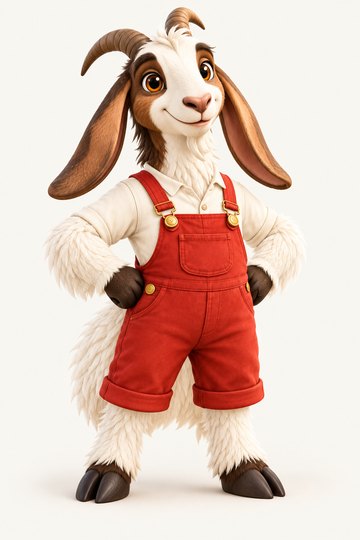
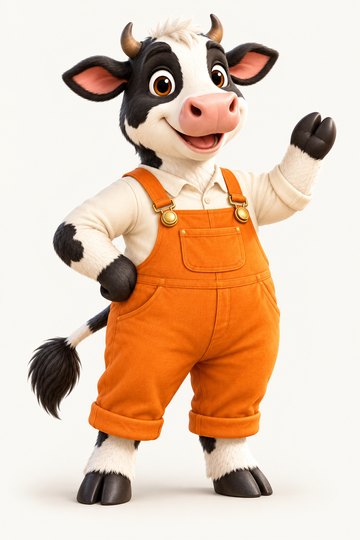
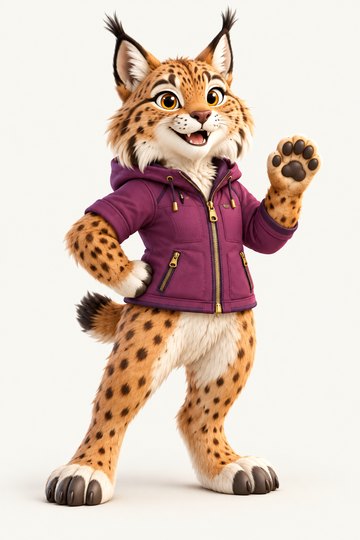
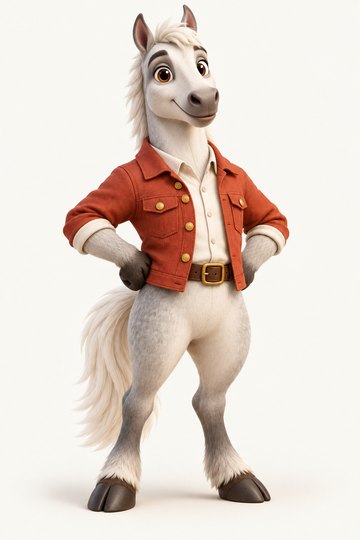
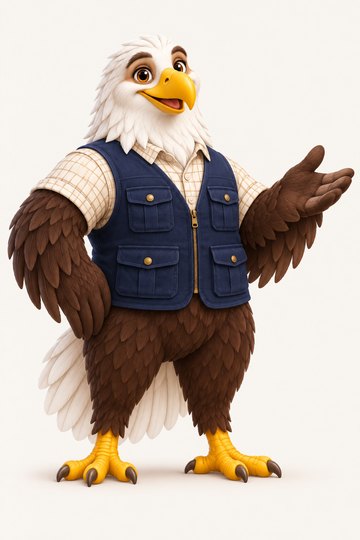
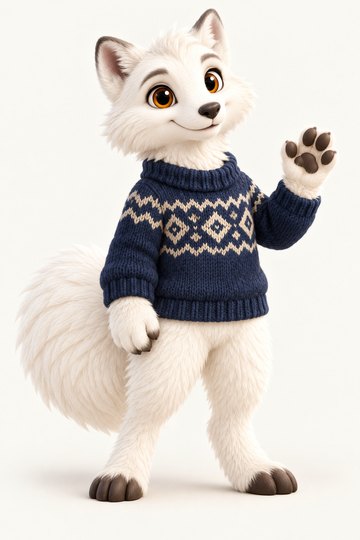
The family is a cast of recurring storytellers, not advertising mascots. Each character is linked to a country, a habitat and a value, and each episode can introduce that country's environment, its animals and resources, and how they can be used without waste. Thirty-six country representatives have now been designed as reference portraits (Appendix A). They are called country representatives because an animal associated with a country is not necessarily its official national animal. No two countries share an animal, and only one dog remains in the cast (Portugal).
4.1 Lead characters for partner countries
| Partner | Lead character | Status |
|---|---|---|
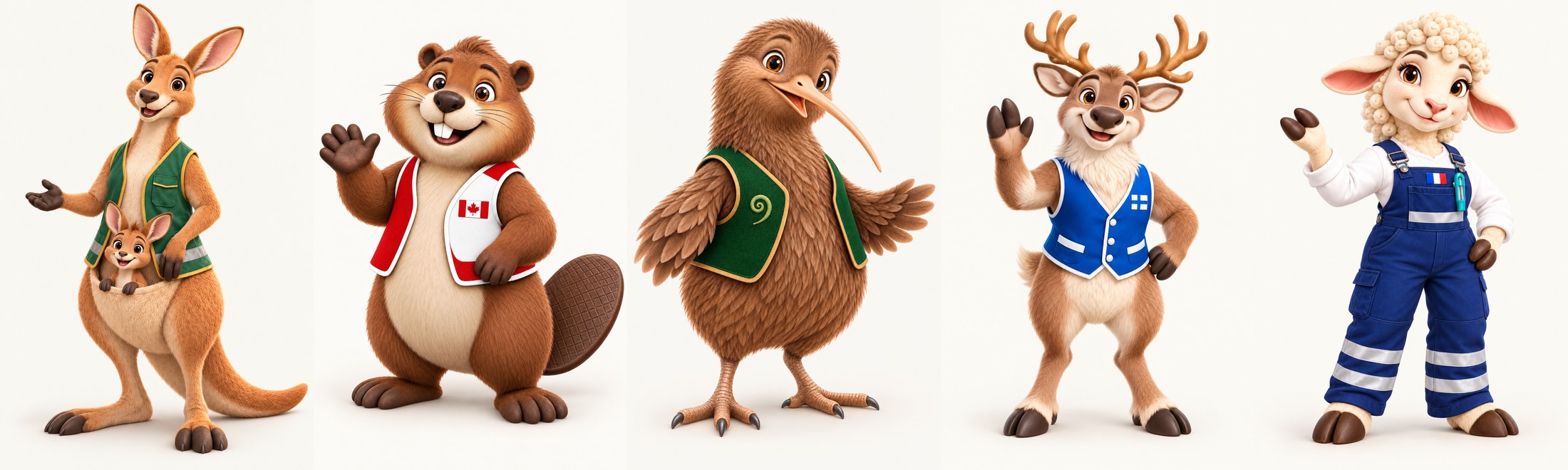
| Awqaf New Zealand (New Zealand) | Kiwi, host of the family | Designed. A curious explorer who notices unused resources. A koru replaces the protected silver fern on its vest. |
| Awqaf New Zealand (Australia) | Kangaroo with joey | Designed. Initiative, practical teamwork and family care. Kept clear of the Australian Made logo style. |
| Awqaf Canada (CAF) | Beaver | Designed. To be checked against other beaver characters online so that it stays clearly distinct. |
| Awqaf Finland | Reindeer | Existing character. |
| Awqaf France | Ewe | Existing character; also the natural lead for Qurbani stories. |
Each partner leads with its own animal, and all appear together in a shared family scene. This gives each partner local pride and Awqaf New Zealand one shared identity. Partner logos and names appear only with each partner's written consent.
4.2 Design rules for the cast
- Keep every character's appearance fixed with a reference sheet (front, side, colours, clothing), so AI tools produce the same character in every episode.
- The 36 reference portraits are three-dimensional concept renders that fix each character's look. Whether episodes use this style or a flatter illustrated version will be decided with Awqaf New Zealand's Sharia advisers (section 5.1).
- A country's animal is an invitation to learn about that country, never a stand-in for its people.
- Review species carefully for each audience. Dogs are viewed differently across Muslim communities, so the cast's one dog (Portugal) is not used in Qurbani or religious episodes without review. The owl is an ill omen in some Arab folk belief, a superstition the Prophet rejected ('no hamah'); the cast's owl is a wise, fair evaluator.
- Use no national emblems or protected symbols on clothing; a plain flag patch only.
- Add a new country character when a partner organisation or community there asks for one and agrees to co-design it.
- Do not show animals in ways that mislead about livestock biology, animal welfare or farm results.
5 Islamic perspectives on the medium itself
Before reviewing what episodes say, Awqaf New Zealand should acknowledge that scholars differ on the medium. Presenting animation as unanimously permitted, or ignoring the question, would invite avoidable criticism.
5.1 Images of living beings
Egypt's Dar al-Ifta describes scholarly disagreement and adopts a permissive position on drawings of humans and animals, subject to content restrictions (Dar al-Ifta al-Misriyyah, 2013a). Shaykh Ibn Baz held that drawing living beings is prohibited, with limited exceptions (Ibn Baz, n.d.-a). Islamic children's publishers in Britain have themselves moved between these positions over time (Janson, 2012). Awqaf New Zealand will therefore state its reasoning openly and ask its Sharia advisers to review the illustration style before release. A stylised two-dimensional version of each character remains available if they prefer it.
5.2 Music and the sound identity
Dar al-Ifta treats instruments as a disputed question and adopts a permissive view within moral limits (Dar al-Ifta al-Misriyyah, 2013b). Ibn Baz permitted the daf for women at weddings and on Eid, while rejecting other instruments (Ibn Baz, n.d.-b). A daf-based theme would therefore suit some audiences and not others.
6 Two communication tracks, one identity
| Track | What the audience should understand | Call to action |
|---|---|---|
| Qurbani education (from 2027) | The ritual, care for the animal, using every part well, sharing with the needy, and the research questions on unused value | Learn more; order Qurbani through the partner Awqaf body in your country |
| Waqf education (now) | What waqf is, its history, and why Awqaf New Zealand moved from Sukuk to Units (Episode 3) | Read the published paper; send comments |
| Smart Waqf (after the Forum) | Reserved until the Twelfth Forum has decided and legal review is complete in each country | None until then |
Qurbani is a religious act with its own rules; the Smart Waqf is a proposed institutional model. Episodes must never imply that buying a unit is itself a Qurbani, or that any participation is guaranteed to produce a particular financial or religious result. Smart Waqf explainers, when they come, will use a separate adult visual style, with the animal family as narrators only.
7 Ethics and political neutrality
This matters because animal characters are already used in political messaging online. A national animal can easily be read as a political symbol, and any such association would harm Awqaf New Zealand's charitable standing and its welcome across communities.
8 The 2027 Qurbani campaign
8.1 Who receives orders and payments
| Market | Receiving organisation | Points to confirm before launch |
|---|---|---|
| New Zealand and Australia | Awqaf New Zealand (Australian customers pay to the NZ bank account) | Update the website statement that Awqaf New Zealand runs no public fundraising; check Australian state fundraising rules (ACNC, n.d.; NSW Government, 2026) |
| Canada | Awqaf Canada (CAF): five monthly instalments by bank transfer to its Canadian account, managed in a Google Sheets order record through Google for Nonprofits. Processing in Canada first; New Zealand or Australia as a backup. | Terms and conditions; CRA treatment, as a Qurbani payment is not a donation (CRA, 2012); a separate project agreement for any overseas processing; Quebec ban on commercial advertising aimed at children under 13 (OPC Québec, n.d.) |
| European Union | Awqaf France and Awqaf Finland, EU bank accounts | Begin only once each body is established; French children's advertising rules (ARPP, 2025); EU rules on minors (European Parliament & Council, 2010) |
Qurbani promotion is aimed at adults. Children's episodes teach values and never ask children to persuade parents to buy, which advertising codes in New Zealand, Australia, France and the EU prohibit (ASA, 2024; AANA, 2023; ARPP, 2025; European Parliament & Council, 2010).
Where several partner bodies run one shared campaign, AAOIFI's governance standards on Islamic crowdfunding and on syndicated financing are useful reference points for roles, disclosure and conflicts of interest (AAOIFI, n.d.-a, n.d.-b). Citing them does not imply that the campaign complies with them.
8.2 Campaign calendar
Eid al-Adha 2027 is expected around mid-May 2027, subject to moon sighting.
| When | Content |
|---|---|
| From January 2027 (Canada) | Orders open with the first of five monthly instalments; families receive automatic updates from the order record |
| Six weeks before Eid | Meet the family: a 15-second introduction for each lead character, released one a day |
| First ten days of Dhul Hijjah | Ten 60-second episodes, one value a day (intention, care for the animal, using every part, sharing with neighbours and the poor). The final frame points to each partner's Qurbani page. |
| After Eid | What happened to your Qurbani: distribution and the use of hides and wool, to build trust for the following year |
9 Brand system and innovative uses
9.1 Sound signature
A 3 to 5 second sound logo at the start and end of every episode, plus a longer background rhythm built from the same pattern, as described in section 5.2.
9.2 WhatsApp sticker pack
Western Muslim families communicate heavily through WhatsApp groups. A free sticker pack of the characters, with Eid greetings in Arabic, English, French and Finnish, can spread recognition through thousands of family groups at almost no cost.
9.3 Heritage touring exhibitions
Roll-up banners of each character with a QR code linking to that character's episode in the visitor's language; a children's family passport stamped at each character; colouring sheets; and a photo board. Shared family photos extend the exhibition's reach.
9.4 Merchandise
T-shirts, cups and soft toys, sold through each partner Awqaf body with the purpose stated, once the trade marks are registered (section 11.3).
9.5 Schools and mosques
A free teaching pack for weekend Islamic schools: one episode, a discussion sheet and a short activity on avoiding waste. Good English and French material is scarce in this sector, and it builds lasting recognition.
9.6 AI production pipeline
Script, storyboard, AI animation and voice, then human review for Sharia accuracy, language and legal compliance, then release. The AI tools used are recorded in each video description, in line with Awqaf New Zealand's published policy on AI.
9.7 Future use: educational games
The characters could later become simple educational games, for example running a farm without waste. Any game will follow the same ethics and neutrality rule (section 7), protect children's privacy (FTC, 2025; Privacy Act 2020), and include no in-game purchases aimed at children and no gambling-style features such as paid loot boxes.
10 Research design
10.1 Hypotheses
- H1: a recurring animal character increases unaided recognition of Awqaf New Zealand after repeated exposure.
- H2: after localisation, the same episode produces comparable understanding in English, Arabic, French and Finnish.
- H3: a character-led episode improves understanding of one unfamiliar waqf concept compared with text alone.
- H4: viewers can tell educational content apart from an invitation to participate financially.
- H5: reusing character assets lowers production time for each additional language.
- H6: adding a real-life bridge at the end of an animal story increases children's intention to act on the value (testing the caution from Larsen et al., 2018).
10.2 Study design
- Comparison: the same script as animation, text only and human presenter, with viewers randomly assigned to one version.
- Samples: adult and family groups in New Zealand first, then Canada and Finland; numbers to be set with a university partner.
- Measures: comprehension straight after viewing and again two weeks later, brand recognition, perceived sincerity and trust, translation accuracy, cost per completed view, and any misreadings.
- Baseline: current statistics from the Awqaf New Zealand YouTube channel before the pilot.
- Ethics: approval from a university ethics committee, and parental consent for any participant under 16.
- Engagement figures will not be read as evidence of charitable impact or Sharia compliance.
11 Safeguards
11.1 Children's content and privacy
YouTube requires every video's audience to be set accurately; videos made for children lose comments, end screens and personalised advertising (YouTube, n.d.-a, n.d.-b). Children's episodes and adult Qurbani or waqf content will therefore be published in separate playlists or channels. Any quiz, competition or mailing list involving children must meet New Zealand privacy law (Privacy Act 2020, s 22; Office of the Privacy Commissioner, 2026) and, for any United States audience, the amended COPPA rule (Federal Trade Commission, 2025). Advertising codes in New Zealand, Australia and Canada explicitly cover cartoon and animal characters (ASA, 2024; AANA, 2023; Ad Standards, n.d.).
11.2 Accuracy and wording
- Use precise terms: proposed, under study, exploratory, independently tested, earlier endorsed version, and approved only where evidence supports it.
- Specialist Sharia review for all religious content, including Qurbani rules and the distinction between temporary cash waqf and qard hasan.
- Legal review before any advertising in a new country; platform availability is not regulatory approval.
- Do not present Google for Nonprofits, AI tools or digital workflows as custody, guarantees or legal approval.
- Native-speaker review of every AI-assisted script and voice track, including the pronunciation of Islamic terms.
- Captions and transcripts for every episode.
11.3 Intellectual property
In the United States, purely AI-generated images may not be protected by copyright without sufficient human authorship (US Copyright Office, 2023, 2025). New Zealand and United Kingdom law treat computer-generated works differently (Copyright Act 1994, s 5(2)(a); Copyright, Designs and Patents Act 1988, s 9(3); DSIT et al., 2026). Awqaf New Zealand should therefore keep records of the human design decisions behind each character, and register the name Awqaf Animal Family and the lead characters as trade marks with IPONZ before merchandise is produced, extending protection to Canada, Australia and the EU through the Madrid System (IPONZ, n.d.-a, n.d.-b).
12 Phased implementation for 2027
| Phase | Deliverable | Decision gate |
|---|---|---|
| A. Identity (late 2026) | Reference sheets for the 36 portraits (done), editorial and neutrality rules, sound signature | Board approval; trade mark applications filed |
| B. Pilot (early 2027) | Three episodes (section 13), English and Arabic | Sharia, legal and content review |
| C. Test (early 2027) | Viewer study with a university partner | Comprehension and translation thresholds met |
| D. Qurbani 2027 | Campaign with CAF in Canada and Awqaf NZ in NZ and Australia | Partner agreements signed; legal points in 8.1 resolved |
| E. Evaluation (mid 2027) | Recognition, learning, cost and feedback report | Continue, revise or stop on the evidence |
| F. Scale (2027 onwards) | French and Finnish versions, exhibitions, schools pack, merchandise | Partners established; trade marks registered |
13 Pilot episodes
Episode 1: Meet the Awqaf Animal Family
A friendly introduction to the characters and the values of stewardship, generosity and learning. The final frame establishes the Awqaf New Zealand identity and sound signature, and asks nothing of viewers. Audience: families.
Episode 2: One Animal, Many Responsibilities
The ewe guides viewers through caring for the animal, the meaning of Qurbani and the question of how every permitted part can be used well. It separates established practice from research questions, and ends with a short real-life scene of a family sharing Qurbani meat with neighbours. Audience: families.
Episode 3: From Awqaf Sukuk to Awqaf Units
An adult documentary-style episode, with the animal family as narrators only, telling the story of a decision: the 2016 approval in general by nine scholars of a structure expressed as a Sukuk; why Awqaf New Zealand did not pursue it (cost, time, complexity, and an instrument unfamiliar to ordinary Western Muslims); and the move towards a simple Unit of participation (Benyounis, 2026b). It shows no unit amounts, terms or returns. It ends by stating that the fiqh question is before the Twelfth Forum, that no offering exists in any jurisdiction, and with the paper's DOI. The only call to action is to read the paper.
14 Recommendations
The recommended positioning is one recognisable animal family, many languages, one mission of responsible charitable stewardship. Animation should be treated as a long-term institutional asset, not a substitute for legal disclosure or a short advertising campaign.
- Approve the character reference sheets, the editorial and political-neutrality rules, and the voice-and-body-percussion sound signature.
- Approve the 36 reference portraits, with the kiwi as host and the kangaroo, beaver, reindeer and ewe as partner leads.
- File trade mark applications before merchandise.
- Produce and test the three pilot episodes with a university partner before the Qurbani 2027 campaign.
- Keep Smart Waqf content separate and on hold until the Twelfth Forum and legal review.
Limitations
This is a strategic working paper based on Awqaf New Zealand's stated objectives, its character designs and the sources cited. It is not a systematic literature review, an empirical evaluation, a legal opinion or a Sharia ruling. Claims of effectiveness and cost advantage require testing. No partner, university or scholar named or implied in this paper has endorsed this programme. Legal points are flagged for professional advice, not settled.
References
- Accounting and Auditing Organization for Islamic Financial Institutions. (n.d.-a). Governance Standard (GS) 14: Islamic crowdfunding governance. AAOIFI.
- Accounting and Auditing Organization for Islamic Financial Institutions. (n.d.-b). Governance Standard (GS) 15: Syndicated financing. AAOIFI.
- Ad Standards. (n.d.). The broadcast code for advertising to children. Ad Standards Canada.
- Advertising Standards Authority. (2024). Children's advertising code. ASA New Zealand.
- Al-Sahafi, M. (2015). The role of Arab fathers in heritage language maintenance in New Zealand. International Journal of English Linguistics, 5(1), 73–83. https://doi.org/10.5539/ijel.v5n1p73
- ARPP – Autorité de régulation professionnelle de la publicité. (2025). Recommandation Enfant (version of 21 May 2025).
- Australian Association of National Advertisers. (2023). Children's advertising code.
- Australian Charities and Not-for-profits Commission. (n.d.). Fundraising hub. ACNC.
- Benyounis, H. (2026a). From charitable waste to sustainable wellbeing: A research framework for unused Qurbani value and a proposed "Smart Waqf Fund" model (Version 1.0). Awqaf New Zealand. Zenodo. https://doi.org/10.5281/zenodo.23874278
- Benyounis, H. (2026b). From Awqaf Sukuk to Awqaf Units: Instrument choice and accessible participation in Awqaf New Zealand's proposed Cash Waqf model (Version 2.0). Zenodo. https://doi.org/10.5281/zenodo.23634738
- Berney, S., & Bétrancourt, M. (2016). Does animation enhance learning? A meta-analysis. Computers & Education, 101, 150–167. https://doi.org/10.1016/j.compedu.2016.06.005
- Calvert, S. L., Richards, M. N., & Kent, C. C. (2014). Personalized interactive characters for toddlers' learning of seriation from a video presentation. Journal of Applied Developmental Psychology, 35(3), 148–155. https://doi.org/10.1016/j.appdev.2014.03.004
- Canada Revenue Agency. (2012). Fundraising by registered charities (Guidance CG-013).
- Copyright Act 1994 (NZ), s 5(2)(a).
- Copyright, Designs and Patents Act 1988 (UK), s 9(3).
- Dar al-Ifta al-Misriyyah. (2013a, 25 July). What is the Islamic ruling on photography and drawing humans? [Fatwa]. dar-alifta.org
- Dar al-Ifta al-Misriyyah. (2013b, 22 December). Musical instruments in Islam [Fatwa]. dar-alifta.org
- Department for Science, Innovation and Technology, Department for Culture, Media and Sport, & Intellectual Property Office. (2026, 18 March). Report on copyright and artificial intelligence. GOV.UK.
- Diyanet TV. (n.d.). Yusuf'un Dünyası [Yusuf's world] [Animated series]. Retrieved 2 November 2026, from https://www.diyanet.tv/yusufun-dunyasi
- European Parliament & Council of the European Union. (2010). Directive 2010/13/EU (Audiovisual Media Services Directive), as amended, art. 9(1)(g).
- Federal Trade Commission. (2025). Children's Online Privacy Protection Rule, 16 C.F.R. Part 312. Federal Register, 90, 16918–16989.
- Folse, J. A. G., Netemeyer, R. G., & Burton, S. (2012). Spokescharacters: How the personality traits of sincerity, excitement, and competence help to build equity. Journal of Advertising, 41(1), 17–32. https://doi.org/10.2753/JOA0091-3367410102
- FramedKeys. (2020, 16 February). Alkhabeer Waqf: Animation videos [2019] [Project portfolio]. Behance.
- Garretson, J. A., & Niedrich, R. W. (2004). Spokes-characters: Creating character trust and positive brand attitudes. Journal of Advertising, 33(2), 25–36. https://doi.org/10.1080/00913367.2004.10639159
- Höffler, T. N., & Leutner, D. (2007). Instructional animation versus static pictures: A meta-analysis. Learning and Instruction, 17(6), 722–738. https://doi.org/10.1016/j.learninstruc.2007.09.013
- Ibn Baz, A. (n.d.-a). Ḥukm al-rasm wa-al-taṣwīr [Ruling on drawing and image-making] [Fatwa]. binbaz.org.sa
- Ibn Baz, A. (n.d.-b). Jawāz ḍarb al-duff li-al-nisāʾ fī al-zawāj [Permissibility of women playing the daf at weddings]. In Majmūʿ fatāwā wa-maqālāt mutanawwiʿa (Vol. 21, p. 178). binbaz.org.sa
- Intellectual Property Office of New Zealand. (n.d.-a). Introduction to the Trade Marks Act 2002. IPONZ.
- Intellectual Property Office of New Zealand. (n.d.-b). International trade marks. IPONZ.
- Iqbal, M. M., & Liddicoat, A. J. (2026). Between heritage and the here-and-now: Bangladeshi children's multilingual ideologies in the UK. International Journal of Bilingual Education and Bilingualism, 29(9), 1306–1326. https://doi.org/10.1080/13670050.2026.2713453
- Jamal, A., Yaccob, A., Bartikowski, B., & Slater, S. (2019). Motivations to donate: Exploring the role of religiousness in charitable donations. Journal of Business Research, 103, 319–327. https://doi.org/10.1016/j.jbusres.2019.01.064
- Jamil, S. (2023). [Thesis on the production of the Serial Animasi Zakat Wakaf; full title to be confirmed]. UIN Syarif Hidayatullah Jakarta repository.
- Janson, T. (2012). Imaging Islamic identity: Negotiated norms of representation in Euro-Muslim picture books. Comparative Studies of South Asia, Africa and the Middle East, 32(2), 323–338.
- Kabir, N. A. (2010). Young British Muslims: Identity, culture, politics and the media. Edinburgh University Press.
- Kuwait Awqaf Public Foundation. (n.d.). Qutoof Al Khair [Interactive stories platform]. Retrieved 2 November 2026, from https://qutoof.awqaf.org.kw/
- Larsen, N. E., Lee, K., & Ganea, P. A. (2018). Do storybooks with anthropomorphized animal characters promote prosocial behaviors in young children? Developmental Science, 21(3), e12590. https://doi.org/10.1111/desc.12590
- Lazismu. (2024, 10 June). Lenggang Samu dan Domu bahagiakan sesama di Car Free Day [Samu and Domu bring happiness to others at Car Free Day]. https://lazismu.org/2024/06/10/lenggang-samu-dan-domu-bahagiakan-sesama-di-car-free-day/
- Mares, M.-L., & Pan, Z. (2013). Effects of Sesame Street: A meta-analysis of children's learning in 15 countries. Journal of Applied Developmental Psychology, 34(3), 140–151. https://doi.org/10.1016/j.appdev.2013.01.001
- Mayer, R. E. (2021). Multimedia learning (3rd ed.). Cambridge University Press. https://doi.org/10.1017/9781316941355
- Mohd Aris, S., Musa, H., Harun, F., Harun, N. H., Ismail, F. A., & Sahari, N. H. (2023). Implementation of Islamic philanthropic culture among children through animated stories: A study on Upin and Ipin animation. Al-Qanatir: International Journal of Islamic Studies, 30(2), 164–175.
- NSW Government. (2026). Authority to fundraise in NSW: Charitable fundraising guidelines.
- Office de la protection du consommateur. (n.d.). Advertising directed at children under 13 years of age: Guide to the application of sections 248 and 249. Gouvernement du Québec.
- Office of the Privacy Commissioner. (2026). Children's privacy guidance for the education sector. privacy.org.nz
- Privacy Act 2020 (NZ), s 22 (information privacy principle 4).
- Rissanen, I. (2012). How Finnish Muslim students perceive and deal with religious and cultural difference: Negotiating religious tradition with modern liberal and postmodern ideals. Education Research International, 2012, Article 978317. https://doi.org/10.1155/2012/978317
- US Copyright Office. (2023). Copyright registration guidance: Works containing material generated by artificial intelligence. Federal Register, 88, 16190–16194.
- US Copyright Office. (2025). Copyright and artificial intelligence, Part 2: Copyrightability.
- Utami, S. P., & Harianto, Y. A. (2021). Da'wa critical discourse analysis in the Omar and Hana cartoon film on Alalala Raju episode. KOMUNIKA: Jurnal Dakwah dan Komunikasi, 15(1). https://doi.org/10.24090/komunika.v15i1.4493
- YouTube. (n.d.-a). Determining if your content is "made for kids". YouTube Help.
- YouTube. (n.d.-b). Set your channel or video's audience. YouTube Help.
Prepared by Awqaf New Zealand with AI assistance (Claude, Anthropic; ChatGPT, OpenAI; Gemini, Google) for drafting and source checking. Responsibility for the contents rests with Awqaf New Zealand alone.
Appendix A The 36 country representatives
Reference portraits, November 2026. The numbers follow the file names in the character library. Roles describe each character's part in the stories, not national characteristics.